

“The meeting of two personalities is like the contact of two chemical substances: if there is any reaction, both are transformed.” — Carl Jung
Perhaps this is one of the most beautiful ways to understand what psychiatry is really about.
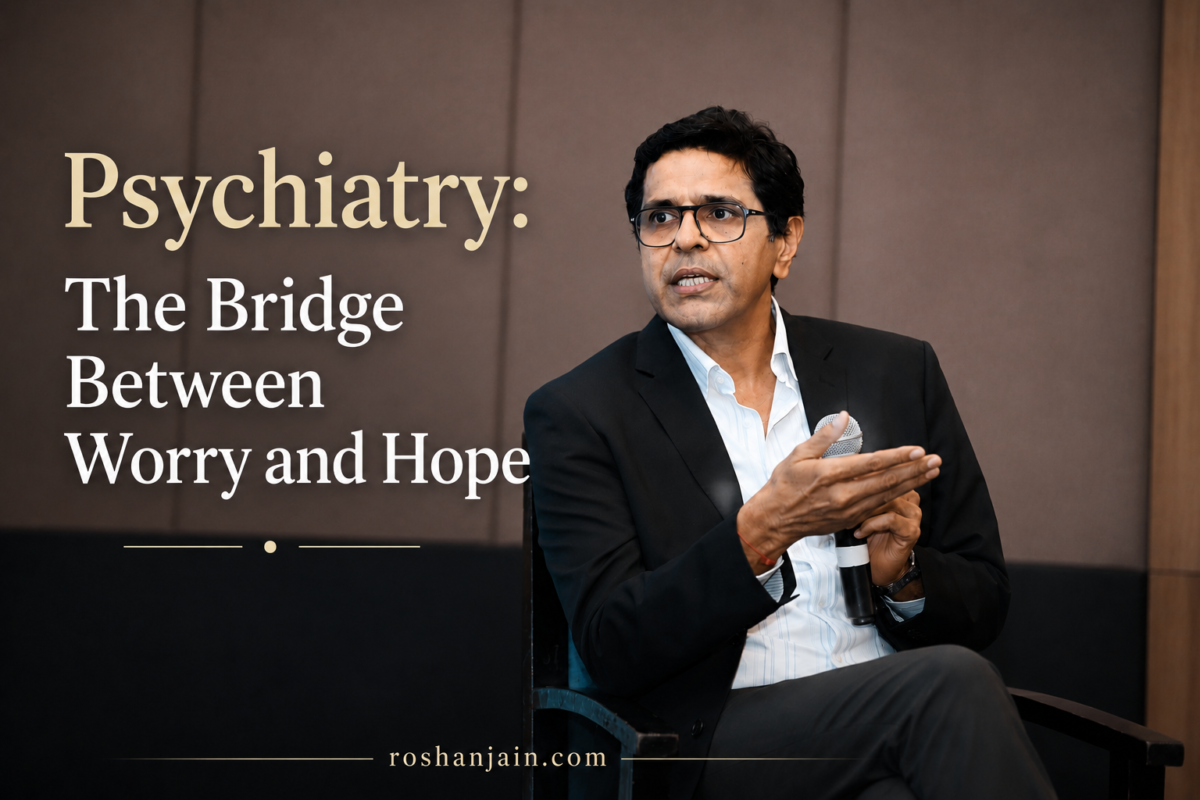
Psychiatry is often described in terms of diagnosis, medication and treatment. But at its heart, psychiatry is also about connection. It is about building bridges — between people, between professionals, between services, and sometimes, most importantly, between a person and themselves.
A person seeking psychiatric help may find themselves standing at the intersection of many different worlds. There may be hospital specialists, a GP, psychologists, therapists, social services, family members and, of course, the patient themselves. Each may hold a different piece of the story.
The psychiatrist often becomes the bridge between these worlds.
A bridge between hospital specialists, helping different disciplines communicate so that care does not become fragmented.
A bridge between the patient and the healthcare system, translating complex medical language into something understandable, while translating the patient’s fears, experiences and needs back into language that professionals can hear and act upon.
A bridge between patients and families, particularly when illness has created misunderstanding, conflict or helplessness. Sometimes families need help understanding the illness; sometimes the patient needs help feeling understood by the people closest to them.
But the bridges psychiatry builds are not only professional ones.
Psychiatry often exists in the space between worry and relief.
A person may arrive carrying months or years of uncertainty: What is happening to me? Why can’t I function like I used to? Am I going to get better? Will anyone understand?
A psychiatric consultation cannot always provide an immediate answer to every question. But it can begin to replace uncertainty with a framework for understanding.
It can move someone from fear towards comfort.
From confusion towards clarity.
From isolation towards connection.
From crisis towards stability.
And, perhaps most importantly, from hopelessness towards hope.
This is why listening is such a fundamental part of psychiatry. Before we can treat a person, we need to understand their story. And before we can understand their story, we need to create a space in which they feel safe enough to tell it.
There is also another bridge that psychiatry can help build: the bridge between how we see ourselves and how we understand ourselves.
Sometimes people spend years fighting parts of themselves they do not understand — their thoughts, emotions, behaviours or vulnerabilities. They may carry shame about their difficulties or believe that needing help is a weakness.
As Osho put it: “The moment you accept yourself, you become beautiful.”
Psychiatry is not about simply asking someone to accept everything about themselves. It is about creating enough understanding that self-judgement can gradually give way to self-awareness.
And with awareness comes the possibility of change.
The psychiatrist therefore becomes something of a translator and navigator.
A translator between medical knowledge and human experience.
A navigator between different services and systems.
A mediator between the patient and their family.
And a companion at a point in life when the road ahead may not yet be visible.
Good psychiatric care is therefore not simply about asking, “What disorder does this person have?”
It is also about asking:
“What has happened to this person?”
“What are they experiencing?”
“What does their family see?”
“What do the other professionals know?”
“What does the person themselves understand?”
“And how can we bring all these pieces together?”
Because people are rarely just a diagnosis. Their mental health exists within relationships, families, workplaces, physical health, communities and life experiences.
Psychiatry sits at the meeting point of all these worlds.
And perhaps that is why the therapeutic relationship matters so deeply. When two people genuinely meet — when one person feels truly heard, and another is willing to truly listen — something can change.
The bridge itself can become part of the treatment.
At MindSense, we think about psychiatry this way: not merely as treating symptoms, but as creating understanding, connection, and a pathway forward.
Because sometimes healing begins not when someone gives you an answer, but when someone helps you make sense of the questions.
And perhaps the psychiatrist’s role is ultimately to help someone cross a difficult stretch of life — not by walking the journey for them, but by helping them find the strength, clarity and support to take the next step.
As the Eastern philosopher Lao Tzu reminds us:
“A journey of a thousand miles begins with a single step.”
Sometimes, psychiatry is simply about helping someone find that first step—and making sure they don’t have to take it alone.
© Dr Roshan Jain 26 August 2026
_____
Dr Roshan Jain is a psychiatrist, educator, and mental health advocate committed to mindful, ethical, and empowering approaches to emotional well-being. He shares insights across multiple platforms to make mental health knowledge accessible and practical for all:
- 🎙️ Podcast: Mind Matters; 📸 Instagram: @_mindsense; ✍️ MindBlog: roshanjain.com; 📺 YouTube: Mindism