

“Understanding begins when we stop judging what we do not understand.”
For many people, ADHD still brings to mind a restless child who cannot sit still in a classroom. But ADHD does not simply disappear when childhood ends. Many adults live with its challenges—sometimes for decades—without understanding why everyday life feels harder than it does for others.
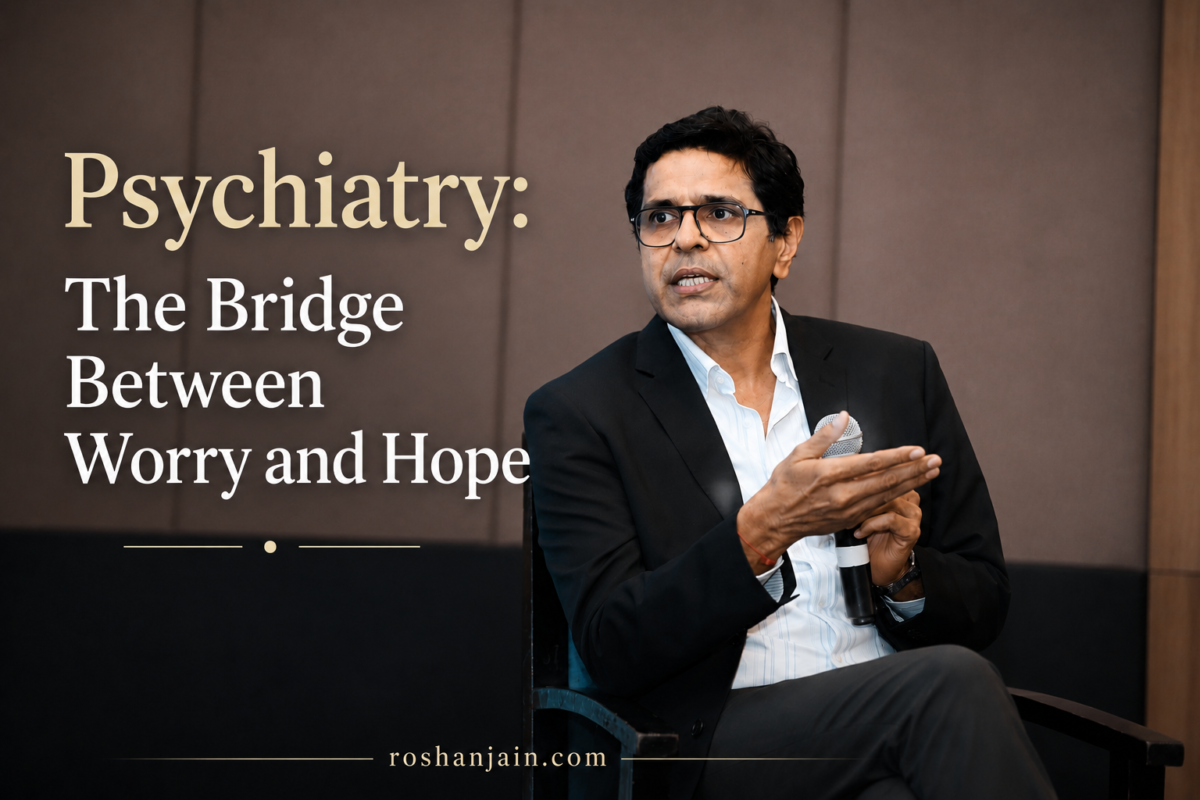
“The meeting of two personalities is like the contact of two chemical substances: if there is any reaction, both are transformed.” — Carl Jung
Perhaps this is one of the most beautiful ways to understand what psychiatry is really about.

Let’s be real for a second: the world is incredibly noisy right now. Between demanding jobs, personal responsibilities, and a literal non-stop stream of bad news in our pockets, it is incredibly easy to fall into a total negativity spiral.
Before you know it, your brain defaults to the worst-case scenario, and you're constantly waiting for the other shoe to drop.

In today’s hyperconnected world, the feeling of being "scattered" has become a near-universal experience. From the moment we wake up, notifications, deadlines, and digital overload fragment our attention. It is a sign of our times that more adults than ever are asking a vital question: Is this just modern life, or do I have ADHD?